Programs · Youth Athletes · Guide
Strength training for youth athletes: a parent guide
Strength training is safe and useful for young athletes when it is well planned and coached, starts with technique and body control, and fits around the sport they already play. Here is when to start, how often, what to do, and what to look for in a coach.
From the private training team at our youth athlete training studio in Los Altos.
Is strength training safe for kids?
Yes, when it is designed for their age and supervised. The old worry that lifting stunts growth is a myth. The American Academy of Pediatrics reports that well-designed resistance training programs have not been shown to harm growth plates, linear growth, or heart health in young people, and that strength gains come with low injury rates when training is supervised and technique comes first.
The National Strength and Conditioning Association (NSCA) takes the same position: a properly designed and supervised program is relatively safe for youth. The risks that show up in studies come from unsafe behavior, poor equipment, and no supervision, not from the act of training.
In other words, the question is less "should my child lift?" and more "who is watching, and what is the plan?" This is not medical advice. If your child has a health condition, check with their doctor first, and good training works alongside their doctor or physical therapist.
What age can kids start?
There is no magic number. The NSCA does not set a minimum age. What matters is readiness: can your child follow directions, keep their balance and posture, and stay focused for a session? Many kids can at about 6 to 7 years old, and others take longer.
Younger children do not start with barbells. They start with games and movement skills: squatting, hopping, landing, pushing, pulling, and carrying, using bodyweight, bands, and light loads. Heavier lifting comes later, as technique, maturity, and training experience grow.
What does the research say about benefits?
Supervised resistance training can build strength and power, improve motor skills like jumping, sprinting, and changing direction, and teach healthy exercise habits early. a narrative review of free-weight training in youth athletes concludes that it is a safe and effective method when appropriately planned and supervised.
Early gains in kids come mostly from the nervous system getting better at using muscle, not from size. That is why a young athlete can get noticeably stronger and more coordinated without looking any different.
How often should a young athlete strength train?
Two or three non-consecutive days a week is the usual range, with a rest day in between. Most young athletes are also at practice, games, or tournaments, so more is not better. The plan should count the sport as training, too.
In season, one or two shorter sessions often keep strength without piling on fatigue. In the off-season there is more room to build. A good coach adjusts the load week to week based on how your athlete is playing and feeling, not a fixed template.
Which exercises are best for youth athletes?
Most of the work comes from a handful of movement patterns, taught well and made harder slowly.
- Squat. Bodyweight squat, then goblet squat holding a light dumbbell or kettlebell.
- Hinge. Hip hinge with a dowel, then light Romanian deadlifts. Strong hips and hamstrings support sprinting and landing.
- Single leg. Split squats, step-ups, and single-leg balance, because most sports are played on one leg at a time.
- Push and pull. Push-ups, band or dumbbell rows, and overhead presses with light weights. Pulling matters as much as pushing, especially for throwing and swinging athletes.
- Core and trunk. Dead bugs, planks, side planks, and carries. This is the "core before weights" idea: a stable trunk lets the arms and legs do their job.
- Jump and land. Low box jumps, hops, and landing drills. Learn to land softly and with control before jumping higher or farther.
- Speed and agility. Short sprints, starts, and change-of-direction drills with full rest between reps, done fresh rather than as a finisher when tired.
A sample first month for a middle school athlete
This is a general template, not a prescription for your child. It assumes a healthy athlete who is new to strength training and already playing a sport.
- Weeks 1 and 2: two days a week. Learn the squat, hinge, push, pull, and carry with bodyweight, bands, or very light weights. Add a few landing drills. Keep sets crisp: 2 sets of 8 to 10 reps, stopping well before form slips.
- Week 3: add a third set on the main lifts if technique is steady, and add single-leg work and a simple core circuit.
- Week 4: add a little weight to one or two lifts, only where the last reps still look good. Add short sprints or agility drills at the start of the session.
Rest about a minute or two between sets. Tell your coach about any sharp or joint pain, and stop that exercise. Muscle effort is normal; sharp pain is a sign to get advice.
How do strength training and sport practice fit together?
Practice builds skill. Strength training builds the strength, power, and body control that support skill, and it spreads the load across more muscles than a single sport uses. That matters for kids who play one sport year round, where the same motion repeats all week.
Plan around the calendar. Start building a few weeks before the season, shift to maintenance when games begin, and ease off around finals, tournaments, and growth spurts when your athlete is tired or clumsy. A home routine of five to ten minutes can fill the gaps between sessions.
What to avoid
- One-rep-max testing while still growing. The AAP discourages it for skeletally immature kids. Use a weight for a set number of clean reps instead.
- Heavy weight before technique. If form breaks down, the weight is too heavy.
- Training with no adult who knows the plan. Home equipment and unsupervised sets are where injuries tend to happen.
- Copying adult programs or bodybuilding splits. Kids need full-body work built around movement skills.
- Stacking it on top of everything. If your athlete is exhausted, sore for days, or dreading training, the plan needs to change.
What to look for in a youth strength coach
- Starts with an assessment of how your child moves, not a generic workout.
- Teaches technique and builds core strength and body control before adding heavier weights.
- Plans around your child's age, growth, sport, and season, and talks with you about it.
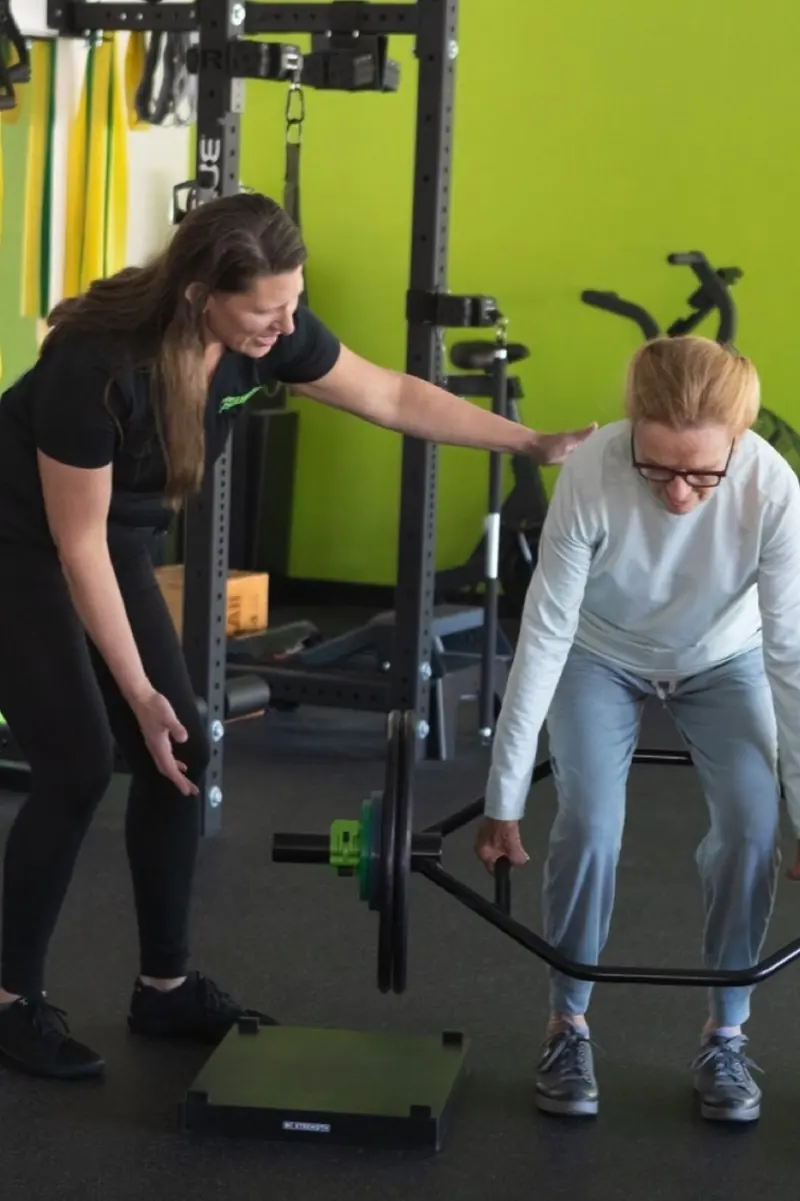
- Gives your athlete full attention, so every rep is watched.
- Is comfortable working alongside your child's doctor, physical therapist, or sport coach.
How we train young athletes in Los Altos
At Calibrated, every session is private and one-on-one in our Los Altos studio. We train athletes from age 6 through high school and into adulthood, with programs matched to their age and stage of growth. Our youth athlete training follows three steps: assess how your athlete moves, build a foundation of core strength and body control before heavier weights, then add sport-specific strength, speed, and agility, plus a home routine that fits around practice.
Jason is a TPI junior coach, Carl is a Functional Strength Coach, and Creed holds FMS and TPI Levels 1 to 3. You can see everyone's credentials on the team page. We keep parents in the loop, including what to practice at home.
I sought out Carl and he did a detailed assessment of my son at the gym. We both appreciated the way he explained things to us, focused on core strength before diving into weights, and increasing my son's overall body awareness.
Strength training for youth athletes: questions
At what age can kids start strength training?
There is no single minimum age. The NSCA says children need to be ready to follow directions and keep their balance and posture, which many kids can do around ages 6 to 7. The first phase is bodyweight movement, bands, and light loads with a coach watching technique.
Does lifting weights stunt a child's growth?
No. The American Academy of Pediatrics reports that well-designed, supervised resistance training has not been shown to harm growth plates or linear growth. Risk comes from poor technique, bad equipment, and no supervision.
How many days a week should a young athlete strength train?
Two or three non-consecutive days a week is the usual range in the research, with a rest day between sessions. During a heavy competition week, one or two shorter sessions is often enough.
Should my child test their one-rep max?
Not while they are still growing. The AAP discourages one-rep-max testing in skeletally immature kids. We keep the focus on clean technique and a challenging weight for a set number of reps.
Is strength training better than just playing more of their sport?
They do different jobs. Practice builds skill. Strength training builds the strength, power, and body control that support skill, and it gives growing athletes a break from repeating the same motion.
Do you offer group or team training?
No. Every session at Calibrated is private and one-on-one, so the whole hour is focused on your athlete and their sport.
Want a plan built around your athlete?
Book a free consultation. We will talk about your athlete's sport, goals, and schedule and recommend a plan. See more on our youth athlete training page, browse all programs, or contact us.