1. Screen
We use the Functional Movement Screen and Y Balance test to find weak links: limited mobility, differences between your left and right sides, and poor stability or control.
Programs · Injury Prevention
Training that keeps you in the sports and activities you love. Our owners worked together in a sports-medicine clinic, and we're happy to work alongside your physical therapist or doctor.
Updated
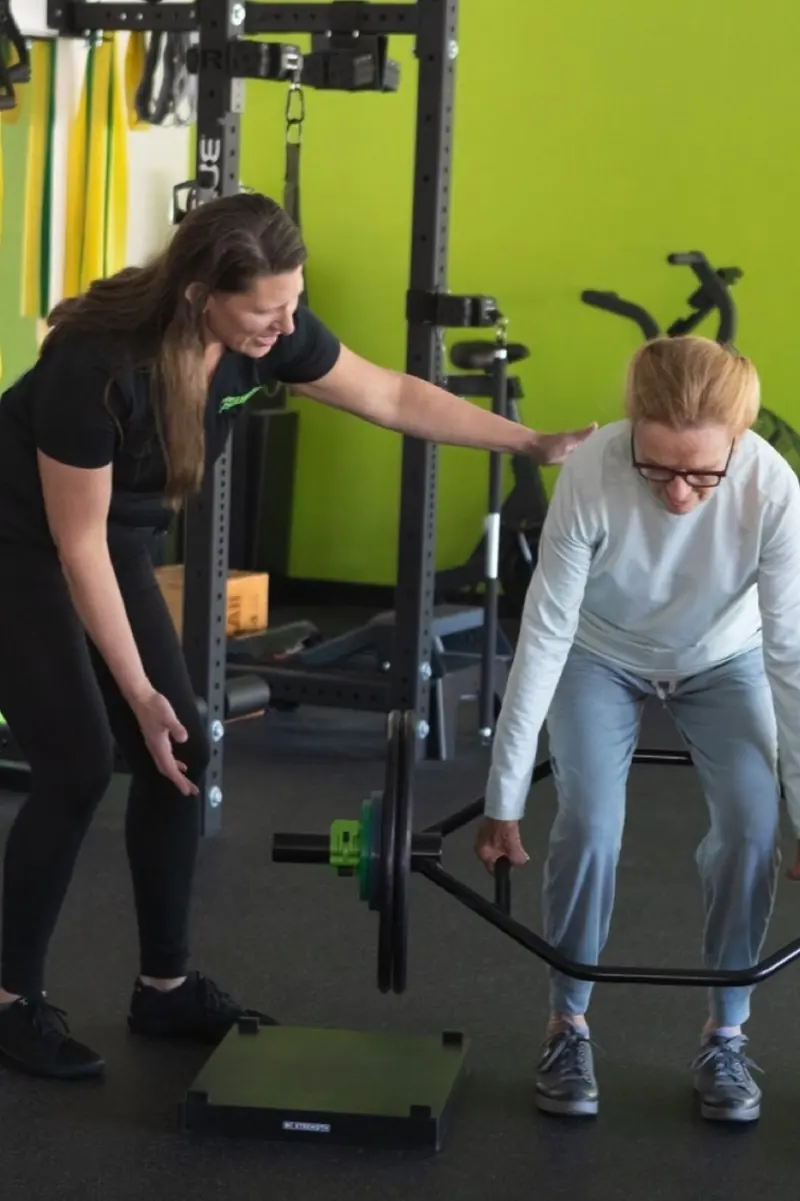
We use the Functional Movement Screen and Y Balance test to find weak links: limited mobility, differences between your left and right sides, and poor stability or control.
Private sessions target those weak links with strength, stability, and mobility work, then build up the demands of your sport.
If you're working with a physical therapist or doctor, we coordinate with them and adjust your plan as they clear you for more.
Strength training is the best-supported way to lower your risk of sports injuries. A 2018 meta-analysis in the British Journal of Sports Medicine pooled six randomized trials with 7,738 athletes aged 12 to 40. Strength training cut the risk of both acute and overuse injuries to about a third (relative risk 0.338), and a 10% increase in strength training volume lowered injury risk by more than four percentage points.
Stretching is a different story. The same research group's earlier review of 25 trials found no injury-prevention benefit from stretching, while balance (proprioception) training and combined programs did help.
For the baseline, the CDC recommends that adults do muscle-strengthening activity at least 2 days a week, working all major muscle groups: legs, hips, back, abdomen, chest, shoulders, and arms. That is why our programs build strength first and add the demands of your sport on top.
We're trainers, not clinicians: we don't diagnose or treat injuries, and we work alongside the professionals who do. Meet the full team.
Prior to working with Jason, I would repeatedly sit out of each season with tendon injuries, pulled muscles, small fractures, etc. … I have been 100% injury free since working with Jason for the past 24 months.
I would regularly show up to training sessions, and unbeknownst to me, Jason had already met with my physical therapist and spent time adjusting our workout plan to suit any new areas of concern that she had identified.
He's kept me fit (and sane) for over 5 years - Ironman training, pregnancy & postpartum, and I'm back running faster than before I had my baby. Also worth mentioning I've been injury free because of his thoughtful planning.
No. We're personal trainers, so we don't diagnose or treat injuries. We help you move better and get stronger, and if you're seeing a physical therapist or doctor, we work alongside them.
That's a great time to start. We pick up where therapy leaves off and keep building strength and control, so you can get back to your activities with confidence.
Not on its own, according to the research. A 2014 meta-analysis of 25 randomized trials found no injury-prevention benefit from stretching, while strength training and balance training both lowered injury risk. We still use mobility work where a screen shows you need it, but strength is the core of the plan.
Most clients train with us two or three days a week. That covers the CDC's recommendation of muscle-strengthening activity on at least 2 days a week that works all major muscle groups, and we plan it around your sport's season so you're not overloaded before a race or match.
Yes. We train athletes from age 6 through adulthood, with programs that factor in growth, the season, and their sport. See our youth athlete training.
Book a free consultation. We'll talk about your activities and injury history and recommend a plan.
Also see training for back and joint pain, golf fitness, weight loss training, general health training, and all our programs.